

Stress Response and Body Signals: When the System Stays Activated
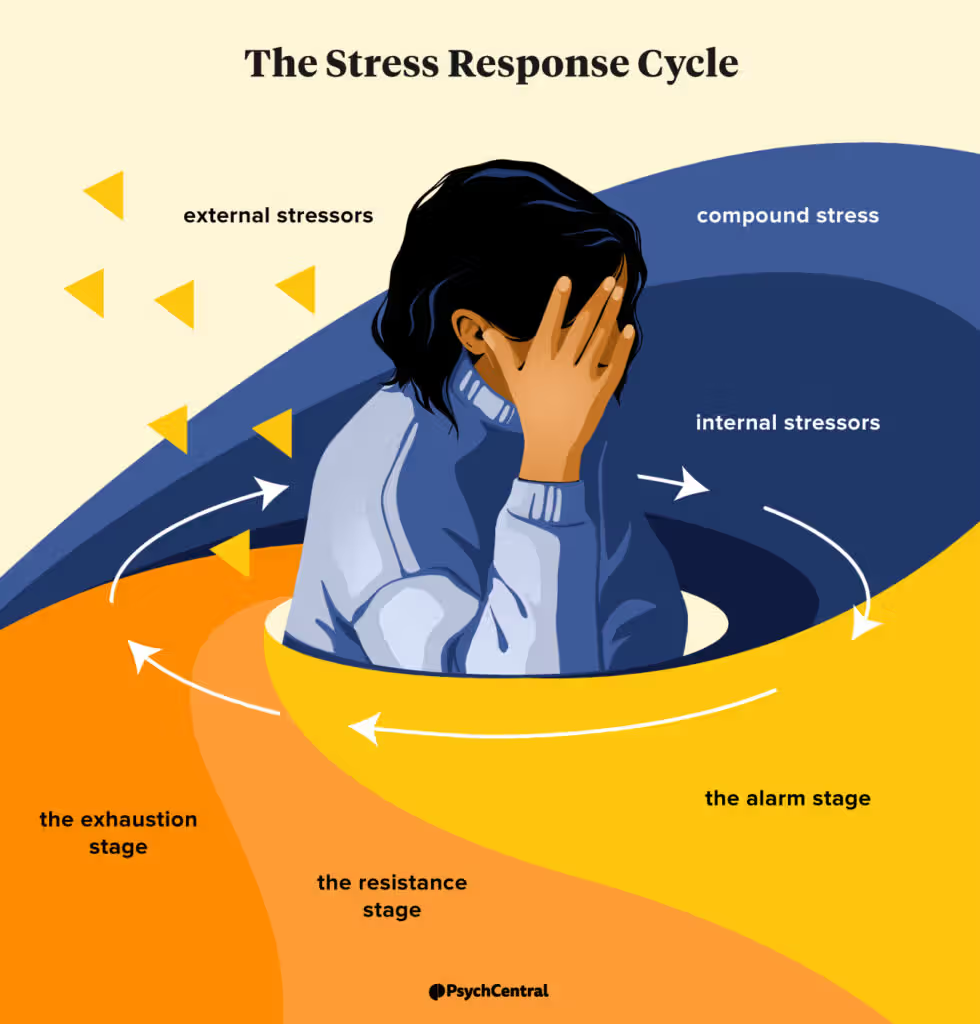
The human body is designed to respond to challenges with precision and speed, activating internal systems that prepare it to react, adapt, and protect itself. This response, commonly referred to as stress activation, is not inherently harmful; in fact, it is essential for survival. In short bursts, it enhances focus, increases alertness, and allows the body to respond effectively to immediate demands. However, in modern environments where pressures are continuous rather than temporary, this system is often activated for extended periods without adequate recovery. Over time, what was once a protective mechanism begins to shift into a persistent state of activation, where the body remains alert even in the absence of immediate threat.
This prolonged activation does not always present itself in obvious ways. Instead, it integrates into daily functioning, becoming part of routine experience. Individuals may continue to perform tasks, engage in responsibilities, and maintain productivity, while internally operating under a constant state of tension. AdvancedMedicineNetwork approaches this condition as a system imbalance, where the stress response remains active beyond its intended duration, gradually influencing both physical and cognitive processes in subtle but significant ways.
The Nature of the Stress Response
At its core, the stress response is a coordinated interaction between multiple systems within the body, including neurological, hormonal, and physiological processes. When activated, it prepares the body for action by increasing heart rate, sharpening attention, and redirecting energy toward immediate needs. This state is highly efficient when used temporarily, allowing individuals to navigate challenges with clarity and speed.
The difficulty arises when this response does not deactivate as intended. Instead of returning to a baseline state, the system continues to operate at a heightened level, maintaining a sense of readiness that is no longer required. This sustained activation places continuous demand on the body, gradually reducing its ability to return to a balanced and relaxed state.

A system designed for short-term response becomes strained when it is required to remain active without pause.
Recognizing Continuous Activation
One of the most challenging aspects of prolonged stress is recognizing its presence. Because it develops gradually, it often feels like a normal part of life rather than a condition that requires attention. Individuals may notice persistent restlessness, difficulty relaxing, or a constant sense of urgency, even in situations that do not demand immediate action. These signals are subtle and easily dismissed, particularly when they do not interfere directly with productivity.
Over time, however, these patterns begin to form a consistent state of activation. The body remains alert, the mind continues to process information rapidly, and moments of true rest become increasingly rare. A structured approach helps in identifying these patterns by focusing on consistency rather than isolated experiences, allowing individuals to recognize when activation has shifted from temporary to continuous.
Impact on Physical and Cognitive Systems
Sustained stress activation affects multiple systems simultaneously. Physically, it can lead to persistent tension, fatigue, and reduced recovery, as the body remains in a state that prioritizes readiness over restoration. Cognitively, it influences focus, decision-making, and emotional stability, often creating a cycle where increased demand leads to further activation.
This interconnected impact makes it difficult to isolate the effects of stress, as they are distributed across different aspects of functioning. Rather than appearing as a single issue, prolonged activation presents as a combination of subtle changes that collectively reduce overall efficiency and well-being.
Restoring System Balance
Restoring balance requires more than simply reducing external pressures; it involves re-establishing the system’s ability to transition between states of activation and recovery. This process begins with awareness, where individuals recognize the presence of continuous activation and understand its impact on their functioning.
A structured system supports this transition by guiding individuals through a process that connects observation with controlled response. By maintaining consistency and clarity, it allows the body to gradually return to a balanced state, where activation is used when necessary and recovery is fully achieved when the demand has passed.
Conclusion
The stress response is a vital component of human functioning, but its effectiveness depends on its ability to activate and deactivate in a balanced manner. When this balance is disrupted, the system remains in a state of continuous readiness, affecting both physical and cognitive processes over time.
AdvancedMedicineNetwork emphasizes a structured approach to recognizing and managing this condition, transforming stress from an undefined experience into a clearly understood system state. Through guided awareness and continuous evaluation, individuals can regain control over their internal balance, ensuring that activation serves its purpose without becoming a persistent burden.
Leave a Reply